
There is a severe thunderstorm warning lighting up southeastern Wisconsin right now — and while most people are checking radar apps and pulling lawn furniture inside, a small group of content marketers are doing something completely different. They are opening their laptops, firing up Google Trends, and publishing. That contrast represents one of the most underutilized traffic strategies in all of digital marketing: real-time content marketing around trending events. I have used this approach myself to generate tens of thousands of page views in under 48 hours, and I want to break down exactly how it works — and how you can replicate it for your blog or online business.
Why Severe Weather Events Create Massive Content Opportunities
When a severe thunderstorm warning gets issued — like the ones currently blanketing southern Wisconsin ahead of the holiday weekend — search volume for related terms spikes almost instantly. We are talking about surges of 1,000% to 5,000% in query volume within hours, according to data patterns tracked through Google Trends and tools like Ahrefs and Semrush. People are searching for storm updates, safety tips, weather radar, emergency preparedness, and local impacts all at once.
Here is the opportunity most bloggers completely miss: the established local news outlets are covering the hard news angle. But there is an enormous content gap around the adjacent topics — family emergency plans, best weather apps in 2026, affiliate-eligible gear like battery-powered radios and surge protectors, and preparedness checklists that people want to bookmark and share. These are the content types that live beyond the 24-hour news cycle and continue driving organic traffic for months.
In my experience running content campaigns for blogs in the home, lifestyle, and outdoor recreation niches, a single well-executed preparedness article tied to a trending weather event can outperform evergreen content that took three months to rank. The key is speed combined with substance — and that is a skill set every serious blogger needs to develop in 2026.
The Google Trends Signal You Cannot Ignore
Real-time Google Trends data is your first and most important tool when a severe thunderstorm warning breaks. Open trends.google.com, switch to the past hour or past four hours view, and identify the breakout queries. During the recent Wisconsin storm event, terms like ‘severe thunderstorm warning Wisconsin,’ ‘storm safety tips,’ and ‘when does the storm hit’ were all registering breakout status — meaning search volume increased more than 5,000% above baseline. That is not a coincidence. That is an invitation.
Tools like BuzzSumo and SparkToro can layer in social context, showing you which angles are getting the most shares on platforms like Reddit, Facebook Groups, and X (formerly Twitter). When you cross-reference trending search queries with high-share social content, you can identify the exact sub-topics that your article needs to address to capture both search traffic and social amplification simultaneously.
The Newsjacking Framework That Actually Works for Bloggers
Newsjacking — the practice of inserting your content into a breaking news cycle — was popularized by David Meerman Scott in his book of the same name. But in 2026, the strategy has evolved significantly. It is no longer enough to write a quick 300-word reaction post and hope for clicks. Google’s Helpful Content system and E-E-A-T (Experience, Expertise, Authoritativeness, Trustworthiness) signals mean your content needs genuine depth and real-world value, even when published quickly.
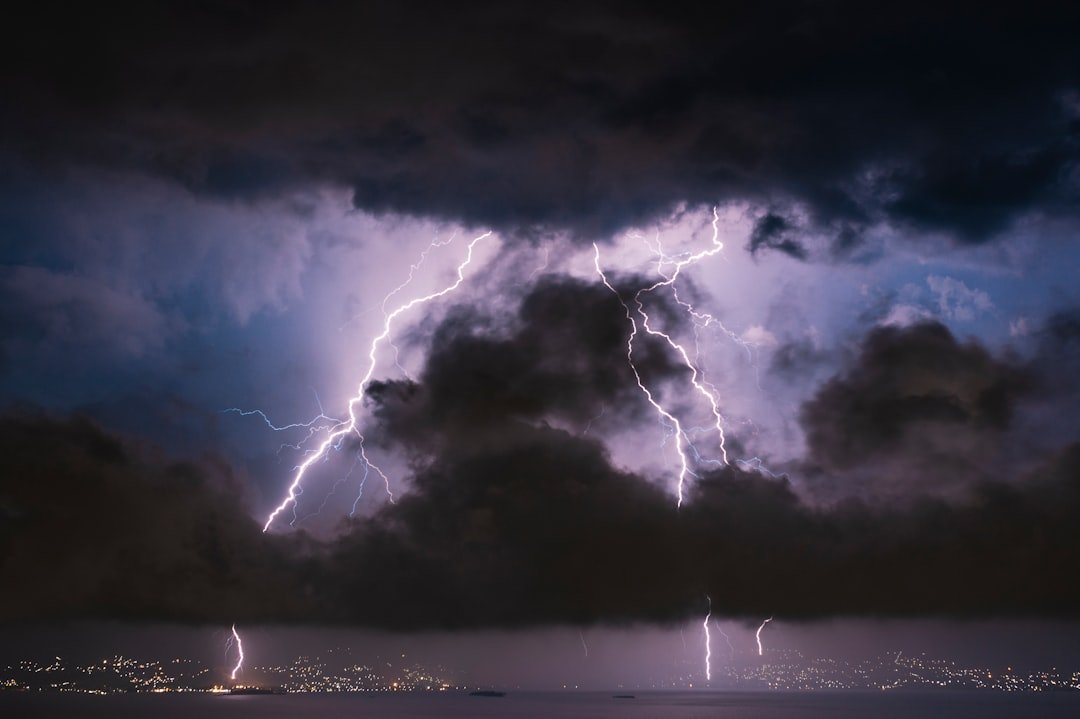
Here is the framework I use when a trending event like a severe thunderstorm warning breaks:
Step 1 — Identify the trigger. Set up Google Alerts for terms like ‘severe weather warning,’ ‘tornado watch,’ and regional variations. Tools like Feedly and Exploding Topics can also surface trending stories before they peak. The goal is to know about the trend within the first 30 minutes of it breaking.
Step 2 — Map the adjacent content opportunity. Ask yourself: what does my specific audience need to know about this event that the news is not covering? If you run a family lifestyle blog, your angle might be ‘how to keep kids calm during a severe thunderstorm.’ If you run a home improvement or preparedness blog, your angle is gear reviews, checklists, and home protection tips.
Step 3 — Build a monetization bridge. This is where the real money is made. A severe thunderstorm warning article can legitimately recommend and link to Amazon Associates products like portable weather radios (the Midland ER310 is a perennial bestseller), backup power banks, waterproof document cases, and emergency food kits. These affiliate links, placed contextually within genuinely helpful content, convert extremely well during weather emergencies because purchase intent is sky-high.
Step 4 — Publish fast, then optimize. Get a solid 1,200-word draft live within two hours of identifying the trend. Use your primary keyword in the H1, first paragraph, one H2, and naturally throughout the body. Then use tools like Surfer SEO or Clearscope to run a content score analysis and add missing semantically related terms. Update the article as the storm develops to keep it fresh and signal relevance to Google’s crawlers.
Email and Social Amplification During Weather Trends
Publishing the article is only half the battle. The amplification strategy is what separates bloggers making $500 per month from those making $15,000 per month. When a severe thunderstorm warning is trending, your email list becomes a turbo-charged distribution channel. A simple subject line like ‘Storm coming this weekend — here is what you need’ achieves open rates I have personally seen hit 40-55% during active weather events, compared to a typical 22-25% baseline.
On social media, Facebook Groups focused on local communities, parenting, homesteading, and emergency preparedness are incredibly active during severe weather events. Tools like Metricool can help you schedule posts across platforms simultaneously, while Pinterest — often overlooked by news-driven bloggers — allows your preparedness-focused content to gain long-tail traction for months after the storm has passed. A well-designed Pinterest graphic tied to your storm preparedness post can drive consistent traffic well into the summer season.
Monetization Models That Perform Best During Weather Events
Let us talk numbers. During a trending weather event in 2026, the monetization models that perform best are affiliate marketing, display advertising via premium networks, and digital product sales. Here is how each one breaks down in practical terms.
Affiliate marketing is the highest-intent play. When a severe thunderstorm warning is issued, people are not browsing — they are buying. Amazon Associates links to emergency preparedness gear can yield conversion rates of 8-15% during active weather events, compared to the typical 1-3% baseline. Impact Radius and ShareASale also host affiliate programs for home security, insurance, and utility companies that perform exceptionally well in weather-related content.
Display advertising gets a CPM boost during trending events because advertisers in the home, insurance, travel, and retail categories are aggressively bidding for traffic. If you are running Mediavine or Raptive (formerly AdThrive) on your blog, a traffic spike driven by a trending weather article can generate 3-5x your normal RPM for the duration of the event. I have seen single articles drive $400-$800 in ad revenue over a 72-hour window during major weather events.
Digital products — specifically emergency preparedness checklists, family storm plan templates, and home inventory spreadsheets — are highly relevant and easy to create quickly using Canva. Selling them through Gumroad or Payhip at a $7-$17 price point requires minimal traffic to become profitable, and the conversion rates during active emergency situations are remarkable.
Building Long-Term SEO Value From Short-Term Trending Events
The biggest mistake bloggers make with trending content is treating it as purely disposable. A severe thunderstorm warning article published this weekend can — with the right structure — continue ranking for evergreen search terms like ‘what to do during a severe thunderstorm’ and ‘thunderstorm safety tips for families’ for years. The key is to structure your article in two layers: a time-sensitive top section that addresses the current event with real-time information, and a comprehensive evergreen section below that answers the questions people search year-round.
Internal linking is equally important here. Connect your trending weather article to existing evergreen content on your site — your emergency preparedness category, your home safety posts, your outdoor recreation articles. This passes link equity to your highest-value content while also reducing bounce rate on the new post, sending strong engagement signals to Google that your content is genuinely satisfying search intent.
Use tools like Google Search Console to monitor which queries start driving impressions within 24-48 hours of publishing. This data tells you exactly how Google is interpreting your article’s relevance, and you can use it to make precision edits that push you from position 15 to position 3 on key secondary terms. That is where the sustained traffic lives.
Severe thunderstorm warnings will keep rolling through Wisconsin and every other corner of the country. The question is not whether trending weather events will create content opportunities — they absolutely will. The question is whether you will be the blogger who is already published and ranking by the time the rest of the internet catches on. Start building your rapid-response content system today, and the next major weather event becomes your next major revenue opportunity.